Nearby
Make a night of it in Shinsekai
What Shinsekai is, why it sits beside the studio show, and how to pair a sumo show with kushikatsu, a tower and a street-food tour.
Book the sumo show ↗Quick answer
Shinsekai is the neighbourhood on the northern border of Nishinari, built in 1912 around a tower now known as Tsutenkaku. It is known for kushikatsu, breaded and fried skewers, and for neon and old-fashioned signs. It is a natural pairing with the studio show, since the show meets in Nishinari Ward.
The short answer
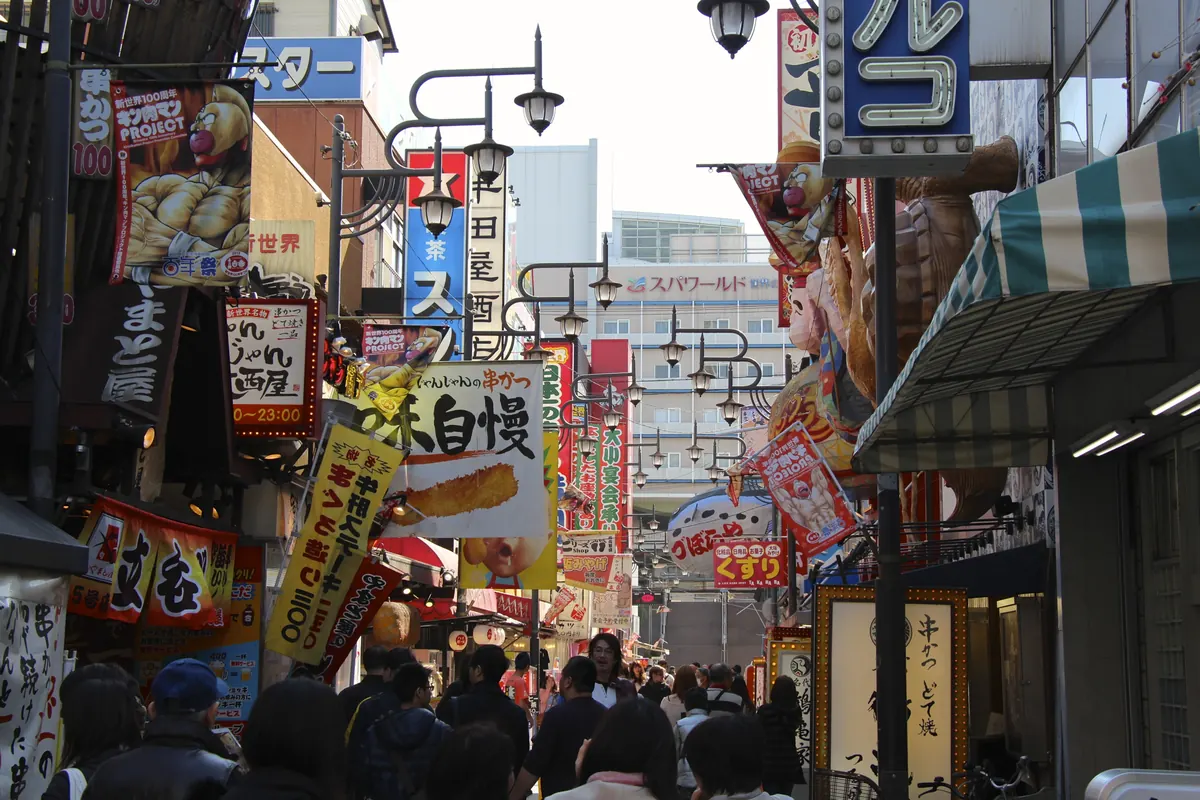
Pair the show with Shinsekai if you want food and an old-Osaka street scene after it. Wikipedia describes Shinsekai as a neighbourhood next to the Minami downtown, on the northern border of Nishinari. The show meets in Nishinari Ward, so the two share a part of the city. Allow a separate stretch of time for each, since the show has fixed starting times and the street scene does not.
Where Shinsekai sits
Shinsekai sits beside south Osaka's downtown Minami area, and Wikipedia places it on the northern border of Nishinari. It lies west of Tennoji Zoo, Tennoji Park and the Osaka Municipal Museum of Art, with Spa World to the south. The show's meeting point is the AI Building in Asahi, in Nishinari Ward. Check the map on your confirmation for how the two connect before you plan the walk.
A neighbourhood from 1912
Wikipedia says Shinsekai was created in 1912, with New York's Coney Island as the model for its southern half and Paris for its northern half. A Luna Park amusement park operated there from 1912 until 1923. The name means New World in Japanese. Much of its look today, with big hand-painted signs and tight shopfronts, is a layer on that early idea of a modern entertainment district for the city.
Tsutenkaku
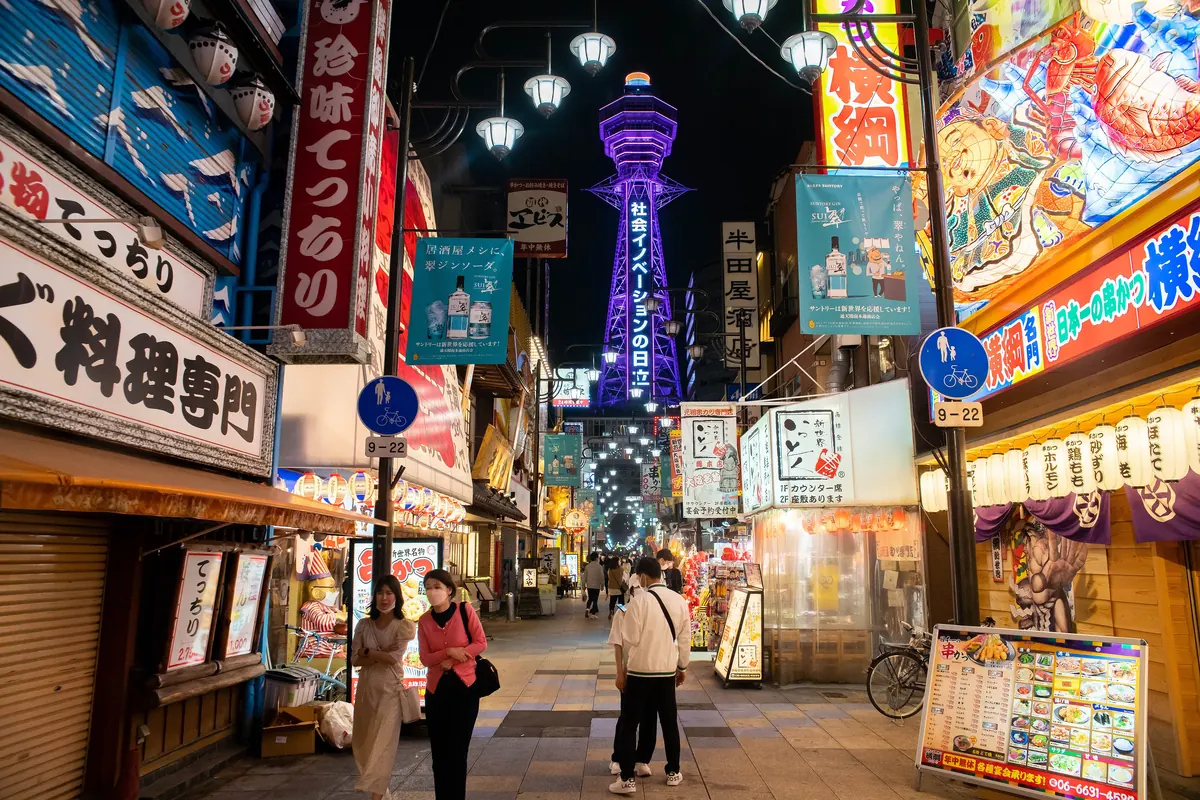
The centrepiece is the Tsutenkaku tower. Wikipedia says the first tower was built in 1912 and was patterned on the Eiffel Tower and the Arc de Triomphe. It was badly damaged by fire in 1943 and taken down, and the current tower, designed by Tachu Naito, opened in 1956. Its lights change colour on a schedule, so the tower looks different from season to season. The observation deck has its own ticket.
Billiken, the lucky figure
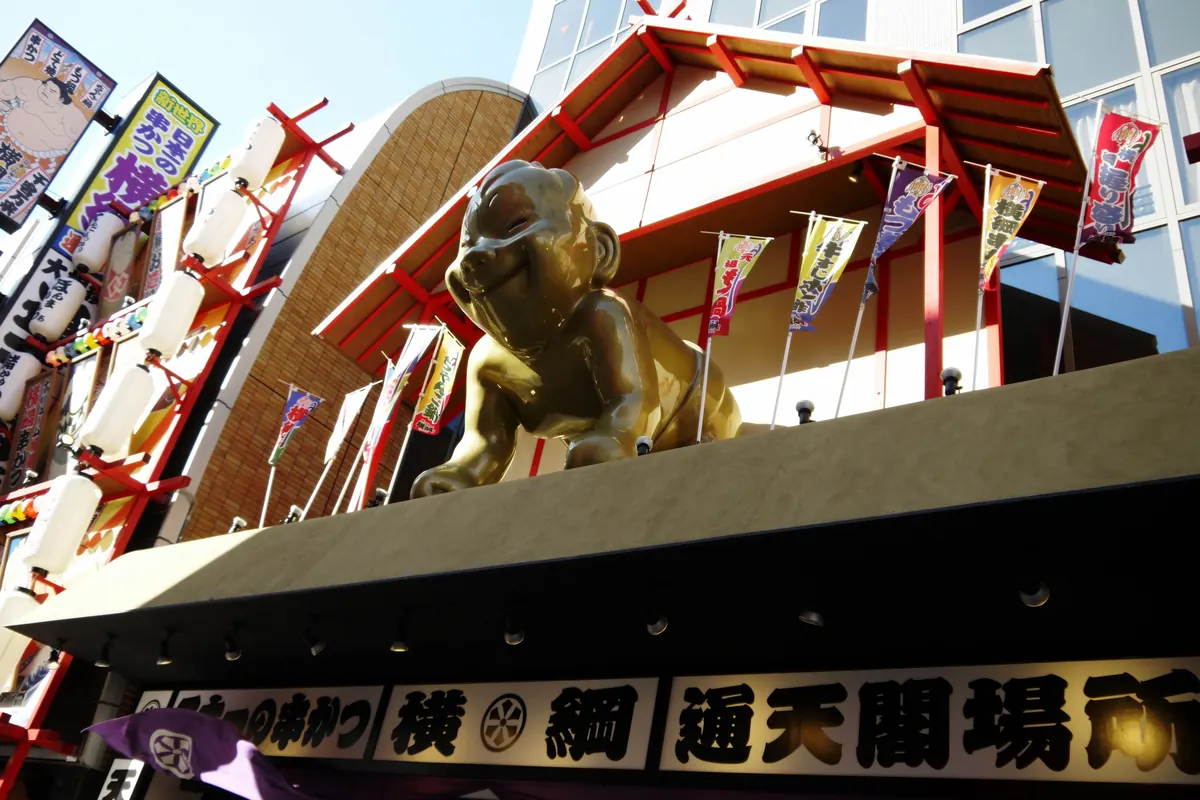
You will see a smiling seated figure around Shinsekai. It is Billiken, an American charm doll that reached Japan about 1910, Wikipedia says, and was enshrined in Luna Park when it opened. When the park closed the original statue went missing, and a copy made from an old photograph was placed in the tower in 1979. It is now a popular good-luck symbol, and its likeness appears on signs and souvenirs.
Kushikatsu
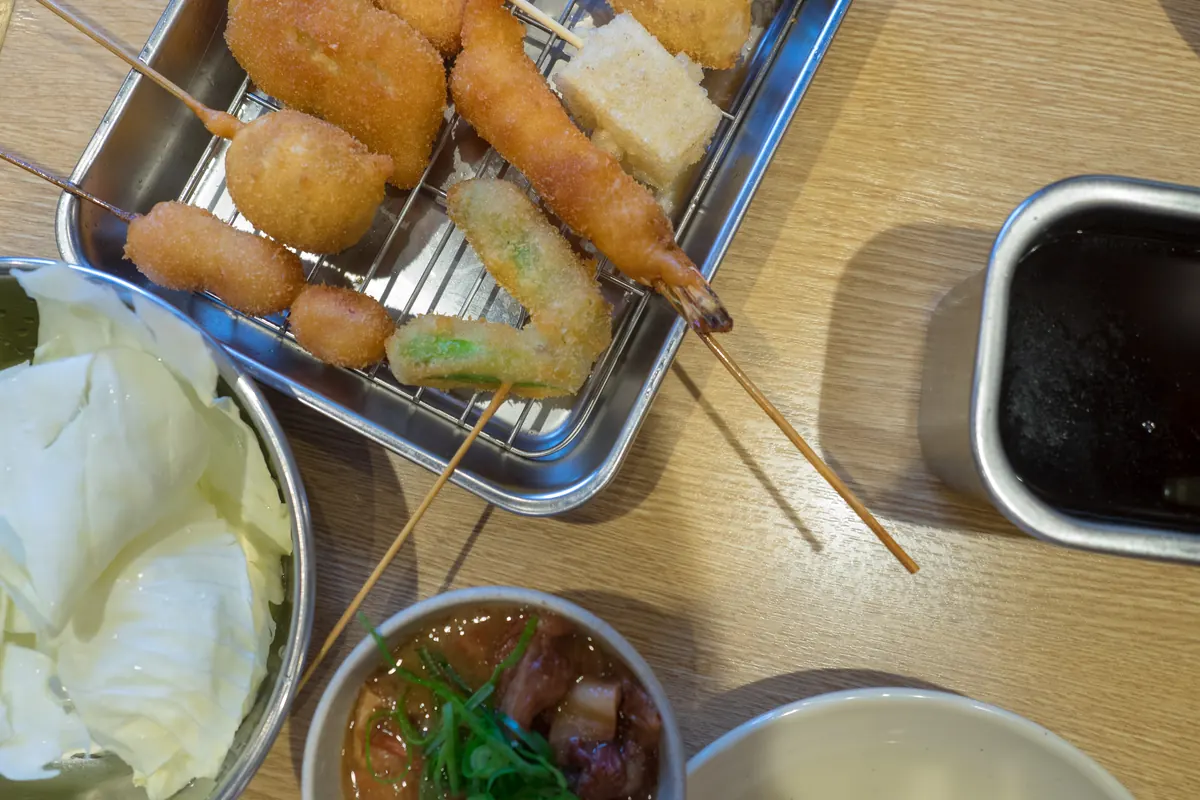
Wikipedia calls kushikatsu the neighbourhood's real culinary strength: meat, fish and vegetables on small sticks, breaded and deep-fried. It also mentions fugu restaurants, which serve blowfish. A common house rule in kushikatsu places, though not one that Wikipedia states, is to dip each skewer once. Ask the restaurant about its own rules and its allergens, since the skewers are breaded and fried in shared oil.
Getting there
Wikipedia's access list for Tsutenkaku names several stations: Shin-Imamiya on the JR and Nankai lines, Ebisucho on the Sakaisuji subway line and the Hankai tramway, and Dobutsuen-mae on the Midosuji line. These serve Shinsekai itself. The show's meeting point is a separate address, so use the map on your confirmation to see which station is best for it, and do not assume one station serves both.
A guided food tour
If you would rather not choose among the restaurants, a guided street-food tour of Shinsekai is among the cards on this page. It is booked on its own and has its own terms, and this guide has not compared it with other options. It suits visitors who want an introduction to the neighbourhood's food in one go, and who have a block of time free before or after the show.
Booking the show
Open the calendar on the show's booking page for starting times. The listing allows free cancellation until 24 hours beforehand and reserve now, pay later, and puts the show at about 90 minutes with an English-speaking MC. Book the show first, then fit Shinsekai around its starting time. This guide is independent, and the booking is made on GetYourGuide.
Frequently asked questions
What is Shinsekai?
A neighbourhood on the northern border of Nishinari, created in 1912 and centred on the Tsutenkaku tower.
Is the sumo show in Shinsekai?
No. The meeting point is the AI Building, Asahi 1-5-1, in Nishinari Ward, which borders Shinsekai. Check the map on your confirmation.
What is Shinsekai known for eating?
Kushikatsu, breaded and fried skewers, according to Wikipedia.
Which stations serve Shinsekai?
Wikipedia's access list for Tsutenkaku names Shin-Imamiya, Ebisucho and Dobutsuen-mae.
Sources